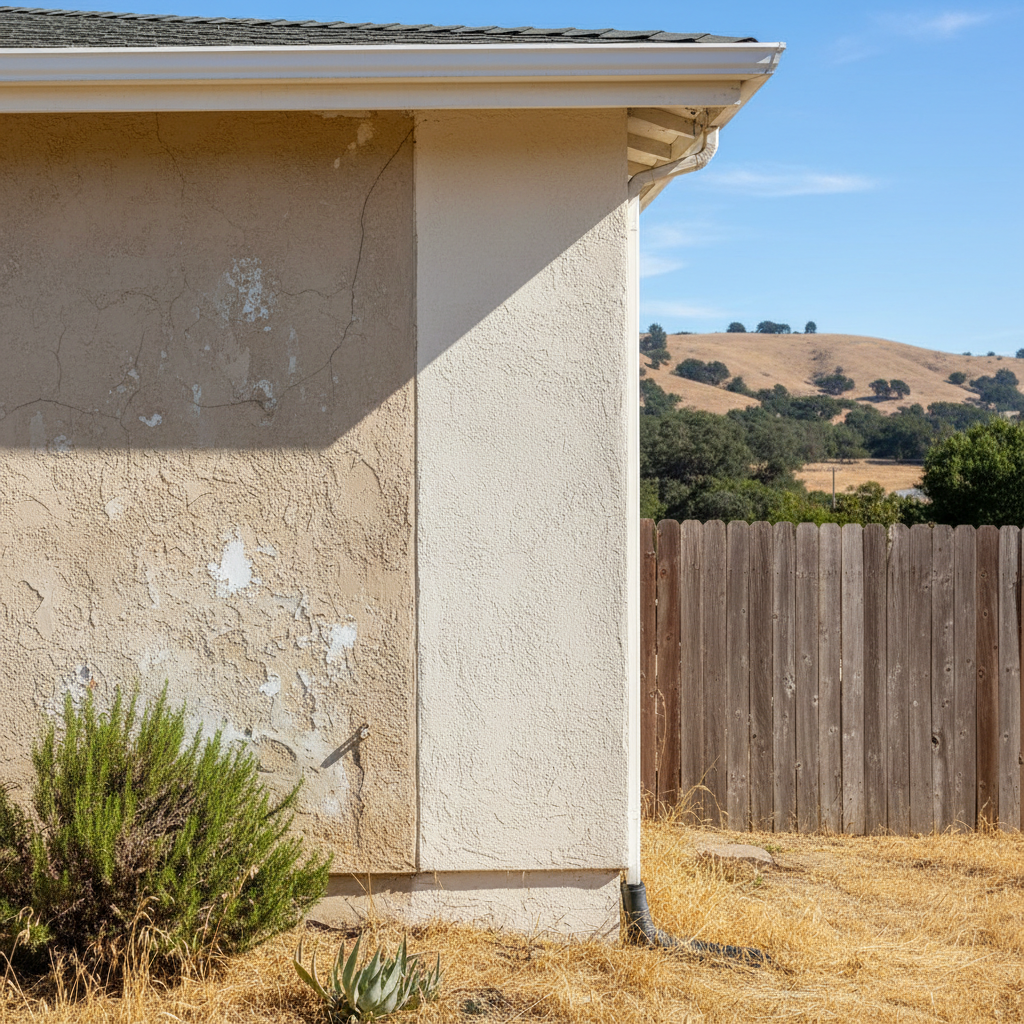
Alright, so your stucco's seen better days, and you're thinking about replacing it. Good call. It protects your home, and when it's failing, you've got bigger problems brewing. But when you start looking into it, you'll hear about two main ways to go: a full tear-off and re-stucco, or putting new stucco right over the old stuff. What's the deal with each, and which one's right for your place here in San Mateo?
The Full Tear-Off: Starting Fresh
This is exactly what it sounds like. We come in, we strip all that old stucco off your house. Every layer, right down to the sheathing or framing. It's a messy job, no two ways about it. But here's why it's often the best move, especially around here.
When you tear off the old stuff, you get a clean slate. This is huge for a few reasons. First, we can inspect the sheathing underneath. In older homes, especially those built before the 80s or 90s, you might have original building paper or even no paper at all, or worse, dry rot from past leaks. We see a lot of that in homes around the Baywood Park area, where some of those older builds are starting to show their age. If there's any water damage, mold, or structural issues lurking, we find 'em and fix 'em before we put anything new on. You don't want to just cover up problems, right?
Second, a full tear-off lets us install a brand-new, modern weather-resistive barrier (WRB) system. Think multiple layers of building paper, often a rainscreen, and proper flashing around all your windows and doors. This is critical for keeping water out, especially with our wet winters and the occasional heavy downpour we get. Modern stucco systems are designed to manage moisture better, and you can only really get that full benefit with a clean install.
Cost-wise, yeah, it's usually more expensive upfront. You're paying for demolition, debris removal, and then a whole new system from scratch. But you're getting peace of mind and a system that's built to last for decades.
The Over-Clad Method: Stucco Over Stucco
This approach involves applying a new stucco system directly over your existing stucco. Typically, we'd install a new layer of building paper and lath right on top of the old stucco, then apply the new scratch, brown, and finish coats. It sounds appealing, right? Less demo, potentially less mess, and often a lower initial price tag.
For some homes, in very specific situations, this can be an option. Maybe your existing stucco is incredibly sound, with no signs of cracking, water intrusion, or delamination, and you're just looking for a cosmetic refresh. But honestly, in my experience, those situations are pretty rare, especially in our climate.
Here's the rub with over-cladding. You're not seeing what's behind the old stucco. Any existing water damage, dry rot, or hidden issues? They stay hidden. You're essentially putting a band-aid over a potential wound. If that old stucco is already compromised, or if its original WRB has failed, you're just adding weight and a new surface, but the underlying problem could still be there, festering away.
Also, you're adding thickness to your walls. This can create issues around windows, doors, and eaves, requiring adjustments or extensions to maintain proper flashing and trim details. It can also make your house look a bit