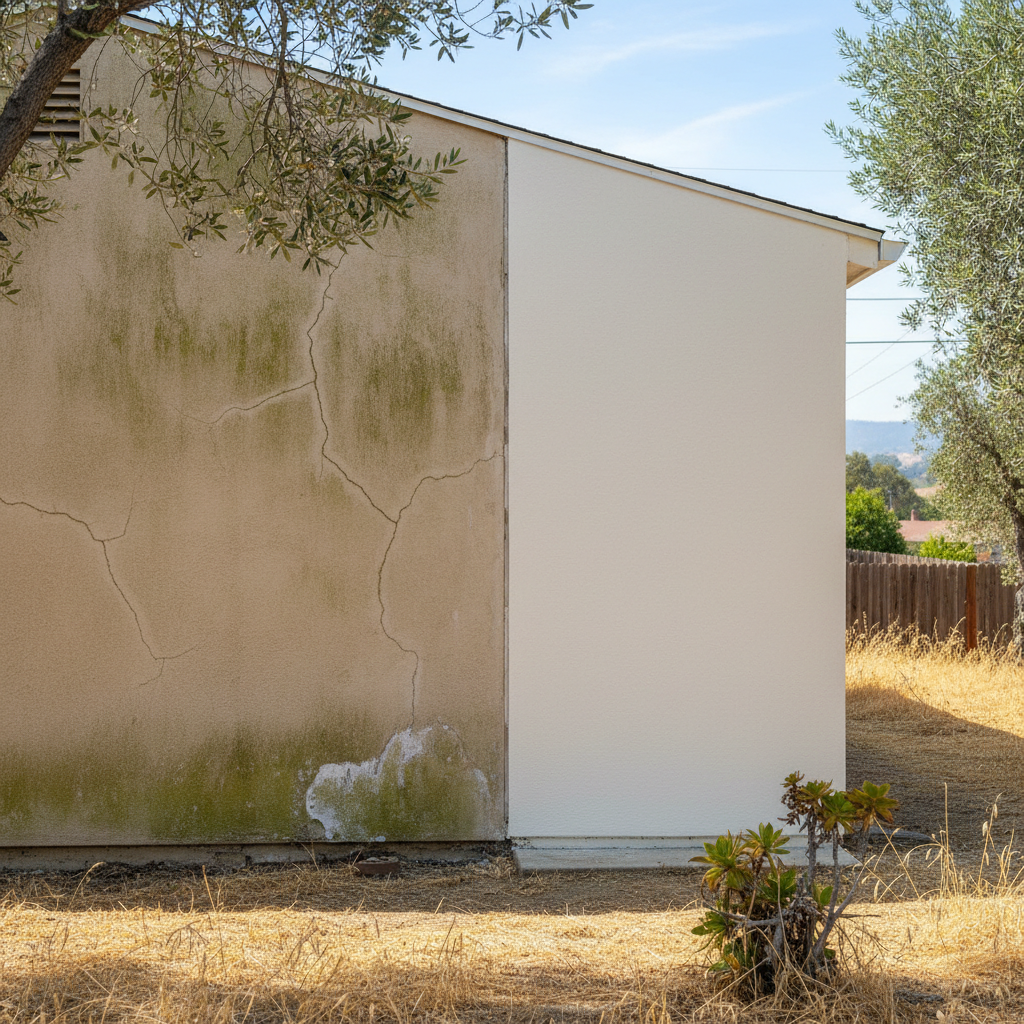
So, you're looking into EIFS for your home here in San Mateo. It's a great system for insulation and finish, but not all EIFS is created equal. You've essentially got two main approaches: barrier EIFS and drainable EIFS. Knowing the difference is a big deal, especially with our coastal weather patterns. I've seen plenty of both over the years, and I can tell you straight up, one is almost always the better choice for homes around here.
Barrier EIFS: What It Is and Its Limitations
Barrier EIFS is the older, simpler version. The idea behind it is that the system itself is a complete barrier against water. You've got your insulation board, usually expanded polystyrene (EPS), glued directly to your sheathing. Then comes a base coat with a fiberglass mesh, and finally, your finish coat. The whole thing is designed to be watertight, keeping all moisture out.
Sounds good on paper, right? The problem is, no exterior system is truly 100% perfect forever. Tiny cracks can form over time, especially with our slight seismic activity or just general expansion and contraction. Or maybe a window flashing isn't quite right. If water gets behind a barrier EIFS system, it's trapped. There's no way for it to get out. This can lead to serious issues like rot in your sheathing, mold growth, and structural damage that you won't even see until it's a major problem. I've seen homes in places like the Baywood-Aragon neighborhood, built in the 70s and 80s, where barrier EIFS was used, and when we opened them up for other work, the damage behind the EIFS was extensive. It's a costly fix when that happens.
Drainable EIFS: The Smarter Choice for Our Climate
Now, drainable EIFS, also called a 'water-managed' or 'rainscreen' EIFS, is a different story. This system acknowledges that some water might eventually get behind the exterior finish – it's just a reality of building. So, instead of trying to be an impenetrable barrier, it's designed to manage that water and get it out.
Here's how it works: between the insulation board and your wall sheathing, there's a drainage plane. This could be a special drainage mat, or the insulation board itself might have vertical grooves. This creates a small air gap. If any water gets past the outer EIFS layers, it hits this drainage plane, runs down, and exits through weep holes at the bottom of the wall. It's a brilliant, common-sense approach that's been proven to work.
Comparing the Two: Cost, Durability, Maintenance, Appearance
- Cost: Drainable EIFS is usually a bit more expensive upfront than barrier EIFS. You're paying for the extra materials like the drainage mat and the more detailed installation process. However, that extra cost is a small price to pay compared to the potential repair bills from trapped moisture in a barrier system. Think of it as an insurance policy.
- Durability: Both systems are durable in terms of resisting impacts and providing insulation. But when it comes to long-term performance and protecting your home from moisture damage, drainable EIFS wins hands down. It's designed to last and protect, even if minor imperfections occur. Barrier EIFS's durability is compromised the moment water gets behind it.
- Maintenance: Both require similar exterior maintenance – cleaning, occasional inspections for cracks, and prompt repair of any damage. The big difference is that with drainable EIFS, if you miss a small crack for a bit, the system can still handle any water ingress. With barrier EIFS, a small oversight can lead to big problems.
- Appearance: From the outside, you can't tell the difference between barrier and drainable EIFS. Both offer that smooth, modern finish or can be textured to mimic stucco. The aesthetics are identical; the critical difference is what's happening behind the surface.
My Recommendation for San Mateo Homeowners
For homes in San Mateo, or anywhere with our kind of weather – coastal moisture, fog, occasional heavy rains, and even just sprinkler splash – I strongly recommend drainable EIFS. It's the standard we prefer to install here at San Mateo Stucco & Plastering because it's simply the more robust and responsible choice for protecting your biggest investment. The building codes have also evolved to favor water-managed systems for good reason.
You might save a little money initially with barrier EIFS, but it's a false economy. The risk of hidden water damage is just too high. With drainable EIFS, you get the excellent insulation and versatile finish you want, plus the peace of mind knowing your walls can breathe and manage any moisture that tries to sneak in. Don't compromise on something so fundamental to your home's health.